The Rise and Impact of Cellphone Bans in U.S. Public Schools & What Parents Can Do
Updated on October 19, 2025As students return to school this fall, the biggest change may not be in the classroom but in their backpacks. Across the U.S., public schools are adopting new policies that restrict — and in many cases, completely ban — cellphones during the school day.
As cellphone bans expand nationwide, parents — especially those of children with special needs — are left without a safe, reliable way to stay connected. Removing phones may reduce distractions, but it also creates a serious gap in safety and communication.
AngelSense fills that gap. It doesn’t record, include browsing capabilities, nor disrupt learning in any way — it simply protects by continuously monitoring the child’s location, and enables two-way voice communication with caregivers in time of emergency.
Why Schools Are Banning Phones
Across the U.S., public schools are rolling out new restrictions, and in some states, complete bans on cellphones during the school day. What started as a handful of district-level experiments has quickly turned into a nationwide movement, with more than 30 states passing legislation or issuing guidance on cellphone bans in schools. Lawmakers and educators cite the same goals: reduce distractions, limit social media pressures, and encourage face-to-face interactions. Many agree that constant notifications and recording devices make classrooms less focused and more stressful for students.
But for families, especially those caring for children with special needs, the bans raise a serious question: how can parents assist and support their child when safety issues arise during the school day?
The Challenges of Cellphone Bans for Families
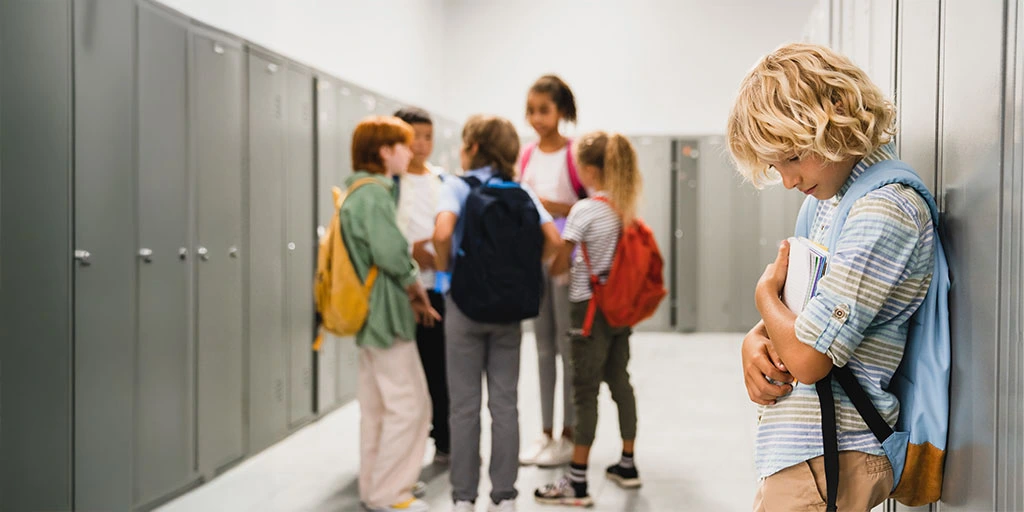
While many educators support phone restrictions to improve focus, parents often see another side of the issue — one that affects safety and peace of mind. Cellphones have long served as a quick way to coordinate pickups, check in during the day, or respond when something goes wrong.
Now, with phones locked away or left at home, parents lose that line of communication. For families of children with special needs, this can feel especially unsettling. These parents rely on being able to monitor their child’s location, ensure safe transitions between home and school, and step in quickly when help is needed.
Why AngelSense Is the Safer, Smarter Alternative
Instead of restoring phone access — with all its distractions — more schools and families are turning to AngelSense as the smart, school-approved alternative.
The AngelSense Assistive Technology provides AI-enhanced, real-time GPS tracking and proactive location alerts without the disadvantages of a smartphone. Parents receive instant notifications if their child doesn’t arrive at school, leaves campus unexpectedly, or makes an unplanned stop. The SOS button gives the child a direct way to call for help, while the auto-pickup speakerphone enables direct two-communication that lets parents offer comfort or guidance right when it’s needed.
The AngelSense Assistive Technology meets school policies because it’s purpose-built for safety, not communication or entertainment.
A Nationwide Conversation
The conversation around cellphone bans continues to grow, with new policies appearing across multiple states. For some families, the change feels disruptive; for others, it’s an opportunity to find better, safer tools.
That’s why solutions like AngelSense are gaining recognition — even featured by ABC7 New York as one of the most trusted alternatives for staying connected under new school cellphone regulations. It’s a proactive way to ensure every child can be safe, supported, and reachable — no cellphone required.
AngelSense does not include many of the features that parents and teachers find most bothersome in a cellphone. They don’t beep, receive regular notifications, and cannot take pictures. Other students don’t have to worry about potentially being recorded. You can put them in a backpack or carry them as a wearable, and keep them out of sight and mind. Most of all, AngelSense devices are designed for emergency use; otherwise, there is no need to interact with them.
Advantages of Phone Bans
These national and school district phone policies did not arise out of nowhere. There is a growing global movement to counteract the negative effects that students experience when smartphones are accessible at school. According to The Economist, 40% of national education systems have already put phone bans in place, or are in the process of doing so.
Similarly, according to a survey by Pew Research, 74% of adults are in favor of restricting or eliminating the use of mobile phones in schools. Many agree with bans only while kids are in class, while a smaller number (44%) want smartphones gone from school grounds for the whole day. Here are some of the reasons why:
Reduced Distractions
Without the constant pinging and alerts sounded by smartphones – which also disturb students who are not using a device – kids can better focus on reading a textbook, doing an in-class assignment, and hearing what teachers are saying.
Less Misuse
Mobile phones are tempting, especially as recording devices. Students might legitimately use them to record a lesson for later reference. But it’s also likely that they will make a video of themselves or other students doing goofy things specifically because they are being recorded, which disrupts the class or break time. Mobile phones also present an opportunity to secretly record others against their will.
Social-Emotional Benefits
It is this sensitive issue that was the subject of a survey conducted in a Texas high school. The survey found that phone bans encouraged more class participation, as students felt less anxious about being recorded when making mistakes. Without the constant pull of social media, students reported lower stress and greater focus on learning rather than appearances.
Better Grades?
The verdict is still out on whether the cellphone ban will help with grades. Some studies conducted during previous bans show that marks go up, while others demonstrate no benefits. But now, with so many American students going phone-free, there will be a lot more data in the coming year to study

Practical Tips for Parents on School Phone Bans
The first step, of course, is to familiarize yourself with the exact policy that your school/state has adopted. Then, be sure to sit down with your child and go over what this change entails for them. To help prepare you, here are some actions that you can take to stay in touch with your child at school, and maintain your peace of mind.
Be Proactive
New rules often come with confusion. Your child might run into a teacher or administrator who believes that smartphone bans apply to all students. However, governments, school boards, and individual schools have no intention of preventing the legitimate use of mobile phones for:
- Monitoring a student’s medical condition
- Translation or interpretation
- Emergency communications
To ensure that your child keeps necessary devices in their possession, you should check with your school administrators. For instance, Ohio schools might require approval from a physician, while in New York State, device access should be included in IEPs or 504 plans.
Explain Changes to Your Child
Autistic people dislike changes to their routines. If your kid is accustomed to having a phone, it might cause panic if a school staffer takes it away. So, before your child goes back to class, make sure to explain that all kids now need to store their phones (all day or in class, depending on policy), but they will get them back.
Encourage the Use of Alternatives
Any potential discomfort that this causes can be solved with an additional means of communication. As mentioned, AngelSense is an excellent option for children with autism, even those who are non-verbal. When giving a new device to your child, tell them why it’s needed. And, of course, you should explain how to use it.

New Phone Policies? No Problem, with AngelSense
As school phone bans continue to spread across the country, families are adapting to a new reality: fewer digital distractions for students, but also fewer instant connections between kids and parents. While opinions are divided, the goal remains the same — creating safer, more focused learning environments.
For parents, that means planning ahead, talking with children about what to expect, and choosing the right tools to stay connected. Assistive technologies like AngelSense bridge the gap, offering safety, peace of mind, and compliance with school policies.
When exploring alternatives to cellphones, it’s important to choose solutions designed specifically for protecting people — not tracking objects. Some popular options, like AirTags, may seem similar but lack essential features for real safety and communication. To understand what truly sets dedicated safety technology apart, read our comparison: AngelSense vs. AirTag: The Critical Differences You Need to Know
A Complete List: Which States Are Banning Phones in Schools 2025?

Get peace of mind from AngelSense, the groundbreaking AI-based assistive technology designed to enhance safety and peace of mind for individuals with special needs and their families. Our solution ensures you stay connected with your loved ones, empowering a higher level of independence while maintaining safety. Learn more about how AngelSense can make a difference for your family.